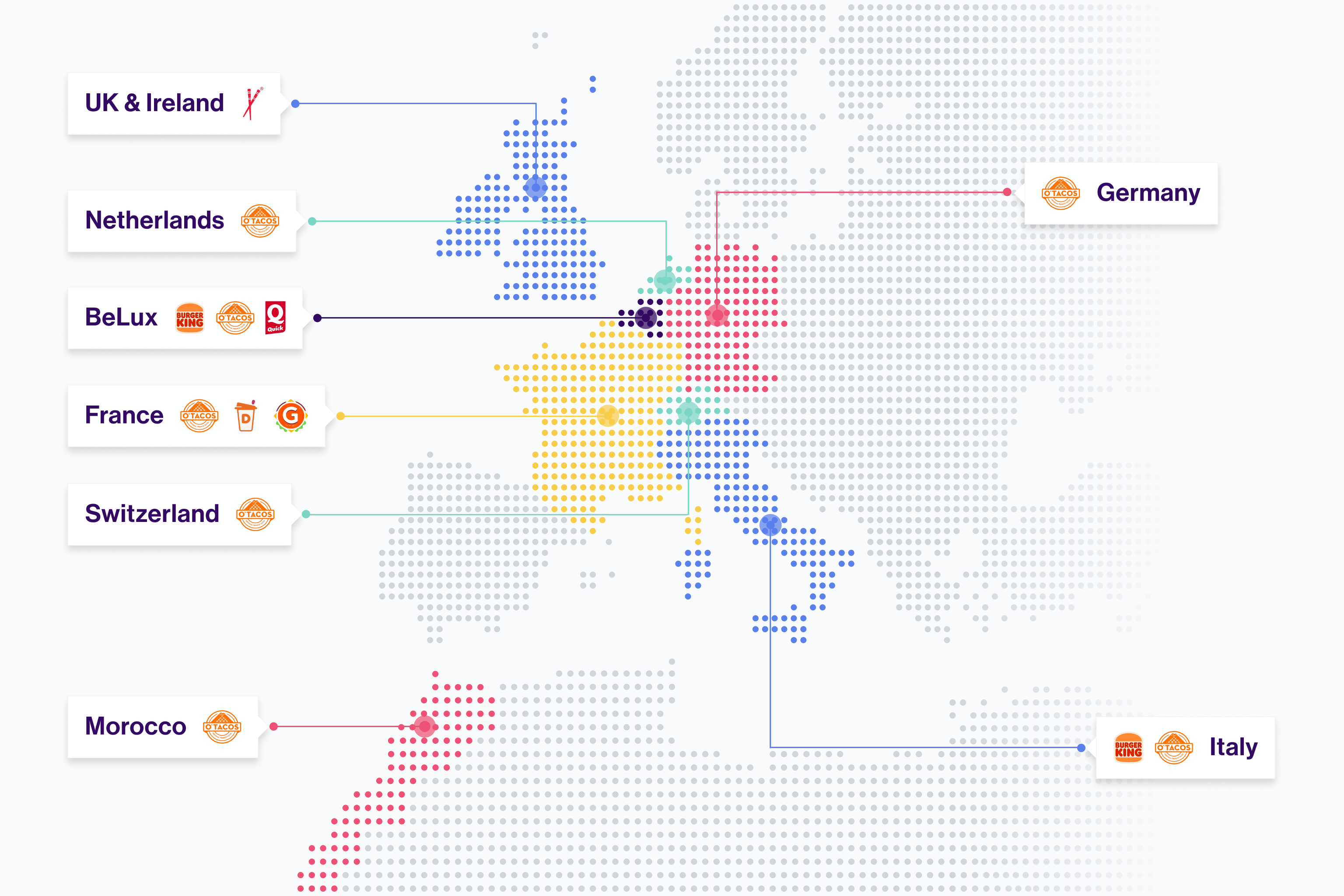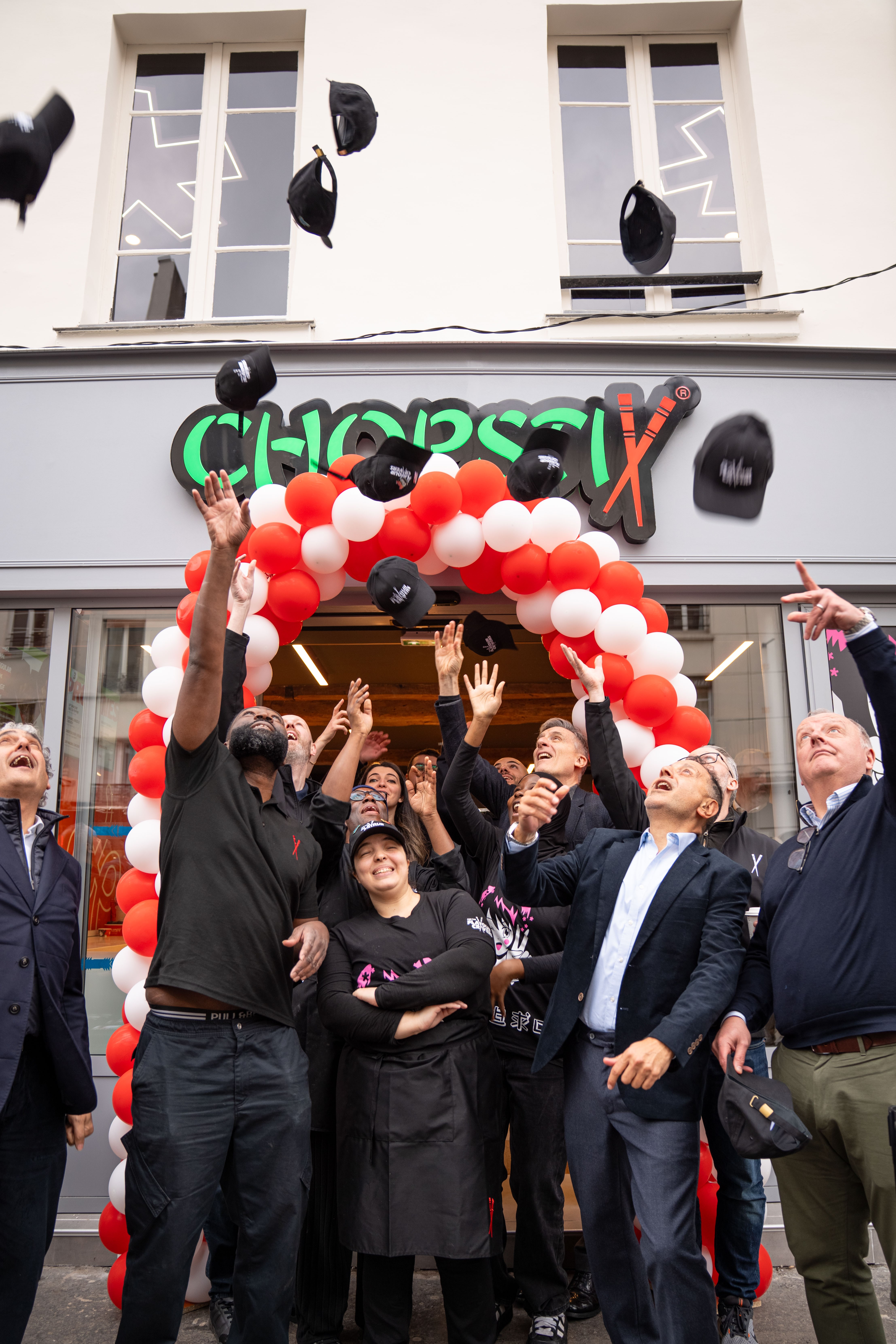
Chopstix France launched its first restaurant on 26 January 2026, at 58 rue du Faubourg Saint-Antoine in the Bastille district of Paris. It is the first Chopstix location outside the UK and Ireland operated directly by the company, and the first step in an announced rollout of 50 restaurants across France over three years. The launch is led by Maya Hamadi, Head of Chopstix France, and is backed by QSRP — the European multi-brand Quick Service Restaurant Platform that also operates Burger King in Belgium, Luxembourg and Italy, Quick, O'Tacos, Dunkin' France, NORDSEE, G La Dalle and more than 1,500 restaurants across nine countries. This article explains how that launch was built — from strategy to execution — and what it says about QSRP's approach to expansion.
At QSRP, expansion is not just about entering new markets. It is about building brands that are designed to grow, scale, and succeed locally from day one. For Maya Hamadi, the starting point was never simply opening restaurants.
"I have been leading the launch of Chopstix in France end to end, from strategy to execution with a very intrapreneurial mindset," she explains. From shaping the market entry plan to building the business locally, the focus was always on the bigger picture. As she puts it, the ambition was to "create the foundations for a brand that can grow and scale successfully in France."
That mindset reflects a broader QSRP approach to expansion, where each new market is seen as a long-term opportunity rather than a short-term rollout.
Expanding into a new territory requires both speed and discipline. From the outset, the team focused on getting the fundamentals right.
"My priorities were very clear: build strong foundations, move fast, and stay true to what makes Chopstix special," Maya says.
This meant ensuring the concept was relevant for the French market, that the business model was robust, and that operations could be executed consistently. At the same time, the customer experience had to be strong enough to support sustainable growth, not just initial traction. It is this balance between pace and structure that underpins QSRP's approach to development in new markets.
Market entry is never linear, and the launch in France brought its share of complexity. "The biggest challenge was managing complexity at speed while launching a brand that was still unknown in France," Maya explains. The team had to build awareness while coordinating across real estate, supply chain, training, legal, marketing, and operations, all at the same time.
What made this possible was a strong focus on alignment across teams and functions. "We overcame that by staying extremely hands on, prioritising relentlessly, and working as one team across functions and countries," she says. "In a launch, speed matters, but alignment and clarity matter even more."
This cross-functional collaboration is a key enabler of QSRP's ability to enter and develop new markets effectively.
A critical part of any expansion strategy is ensuring that a brand resonates locally without losing its identity. "The goal was never to change the DNA of Chopstix, but to translate it well for France," Maya explains. The core elements of the brand remained consistent — bold flavours and generous portions, a customisable pan-Asian menu built around noodles and rice bowls, a halal offer, speed under one minute, accessibility, and personality.
At the same time, the offer and communication were adapted to meet local expectations. "French consumers are very attentive to value and brand credibility, so the work was about making Chopstix feel exciting, clear and compelling in this market."
This ability to combine a strong global concept with thoughtful local execution is central to QSRP's development model.
Behind every successful market entry is the right balance between entrepreneurial drive and structural support.
"Launching a brand in a new market requires entrepreneurial energy, but also the backing of a strong platform," Maya says. "QSRP brings scale, structure and strong support functions, while Chopstix brings a clear brand identity and a proven concept."
Founded in 2014, QSRP has grown into one of Europe's leading multi-brand QSR platforms, with a portfolio that spans burgers, coffee and donuts, French-style tacos, seafood, and — since its strategic investment in Chopstix in 2024 — pan-Asian quick service. This combination allows teams to move quickly while benefiting from the experience, expertise, and infrastructure of a broader group, creating the right conditions for growth in new territories.
While the journey in France is still in its early stages, the foundations that have been put in place reflect a clear and repeatable approach to expansion.
"The biggest success factors have been clarity of vision, strong collaboration between teams, and the ability to stay close to the customer," Maya says. Just as importantly, the team has embraced a mindset of continuous improvement. "A successful launch is not about getting everything perfect from day one. It is about learning fast, adjusting where needed, and staying consistent on the bigger ambition."
Chopstix also brings something new to the French market. "What makes Chopstix especially attractive in France is that the concept is still relatively unique," Maya explains. By offering a scalable, accessible Asian QSR concept, the brand is helping to develop a category that is still underrepresented in France.
The launch of Chopstix France highlights some of the key principles that guide QSRP's growth into new territories.
"One key learning is that strong local execution is critical," Maya notes. "A great brand and a strong business model are essential, but success depends on how well you translate them into local realities."
She also emphasises that expansion goes beyond opening sites. "Market entry is never just about opening stores. It is about building the right structure for sustainable growth."
As QSRP continues to expand its footprint, these principles remain central. The experience in France shows that successful development is not just about entering new markets, but about building brands that are set up to thrive once they get there.
Chopstix opened its first restaurant in France on 26 January 2026 in Paris. It is the first Chopstix location operated directly by the company outside the UK and Ireland.
The first French Chopstix restaurant is at 58 rue du Faubourg Saint-Antoine, in the Bastille district of Paris' 12th arrondissement.
Chopstix and QSRP have announced a target of 50 restaurants in France over three years, starting with Île-de-France before extending to major French metropolitan areas and the provinces.
Chopstix France is led by Maya Hamadi, Head of Chopstix France, who oversees the launch and development of the brand in the French market end to end.
Pan-Asian QSR is a quick service restaurant category that brings together flavours and dishes from across Asia — typically built around customisable noodles, rice bowls and stir-fries — delivered at speed and at accessible price points. Chopstix is one of the category leaders in Europe.
QSRP — the Quick Service Restaurant Platform — operates a multi-brand European portfolio that includes Burger King (in Belgium, Luxembourg and Italy), Quick, O'Tacos, Dunkin' France, NORDSEE, G La Dalle and, since 2024, Chopstix. The group runs more than 1,500 restaurants across nine countries and serves around 100 million customers a year.